 Pin it
 There's something about Sunday mornings that makes you want to slow down, and that's exactly when Eggs Benedict found its way into my kitchen routine. I'd been intimidated by hollandaise for years, convinced it was some fussy French technique reserved for culinary school graduates, until a friend casually made it at her place while chatting about everything else. Watching her whisk egg yolks over gentle heat like it was the most natural thing in the world changed something for me. Now I make it regularly, and every time those creamy clouds of sauce meet a perfectly runny yolk, I remember why brunch became my favorite meal to cook.
I'll never forget the first time I made this for someone who'd sworn they didn't like poached eggs. They were skeptical until they took that first bite, and the look on their face when the yolk broke open was all the proof I needed. Now whenever friends come over for brunch, this is what they request, and I've learned that feeding people something this beautiful and comforting does something special to the whole day.
Ingredients
- Egg yolks: Room temperature eggs emulsify better, so take yours out of the fridge 15 minutes before you start if you have time.
- Lemon juice: Freshly squeezed is worth the effort—it brightens the sauce and helps stabilize the emulsion.
- Unsalted butter: Melted but not smoking, and it should still be warm when you add it to keep everything moving smoothly.
- Dijon mustard: A small touch that adds depth without overwhelming, but leave it out if you prefer a purer butter flavor.
- Cayenne pepper: Just a pinch wakes up the whole sauce with a gentle warmth at the end.
- Large eggs: Fresh eggs have firmer whites that hold their shape better when poaching.
- English muffins: Look for ones with good nooks and crannies to catch the butter and sauce.
- Canadian bacon: A few minutes in a hot skillet is all you need—it's already cooked, so you're just warming it through.
- White vinegar: Helps the egg whites set faster and keeps them from spreading everywhere in the water.
Tired of Takeout? 🥡
Get 10 meals you can make faster than delivery arrives. Seriously.
One email. No spam. Unsubscribe anytime.
Instructions
- Start your hollandaise:
- Fill a saucepan with a couple inches of water and bring it to a gentle simmer, then nestle a heatproof bowl on top so it's not touching the water. Whisk your egg yolks with lemon juice in that bowl, watching as they lighten and get thick and pillowy—this should take about 3 to 4 minutes of steady whisking.
- Build the sauce:
- Slowly drizzle in your warm melted butter while whisking constantly, like you're teaching the yolks to accept it drop by drop. Once you've incorporated everything, taste and adjust with mustard if using, a tiny pinch of cayenne, and salt, then move the bowl off the heat to keep it warm.
- Toast your muffins:
- Split your English muffins and toast them until they're golden and crispy, then if you want to be fancy, butter them lightly while they're still warm so it melts right in.
- Warm the Canadian bacon:
- Get a skillet hot over medium heat and lay the bacon slices in for just a minute or two per side until they're heated through and have a little color.
- Poach your eggs:
- Bring 2 to 3 inches of water with a tablespoon of vinegar to a gentle simmer in a medium saucepan—you want lazy bubbles, not an aggressive boil. Crack each egg into a small bowl, then swirl the water to make a vortex and slide the egg into the middle, letting the whites wrap around the yolk.
- Pull them at the right moment:
- After about 3 to 4 minutes, the whites should be set and opaque but the yolk should still jiggle slightly when you nudge it with the spoon. Lift each egg out with a slotted spoon and let it drain on a paper towel for just a second.
- Plate and serve:
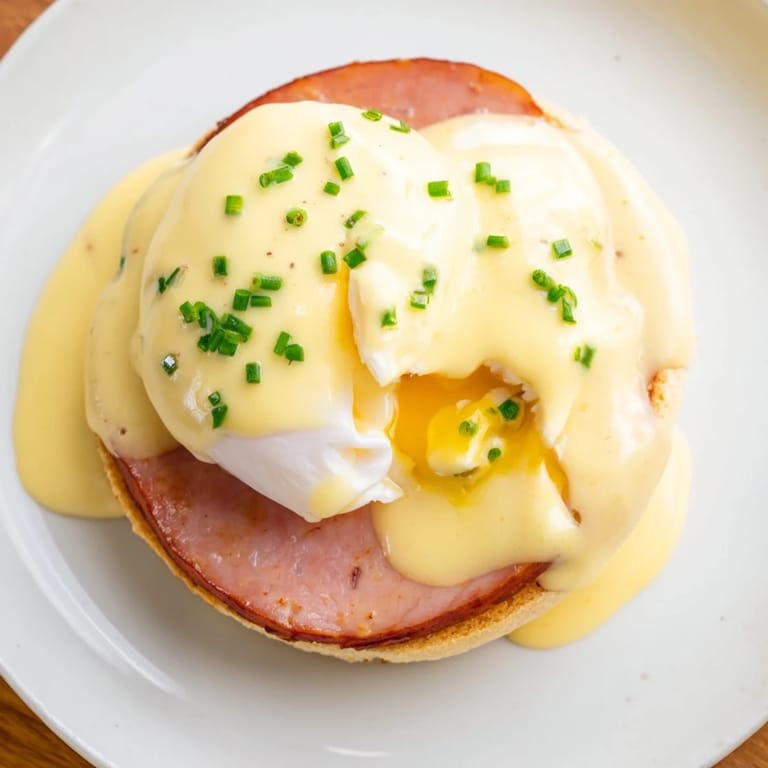
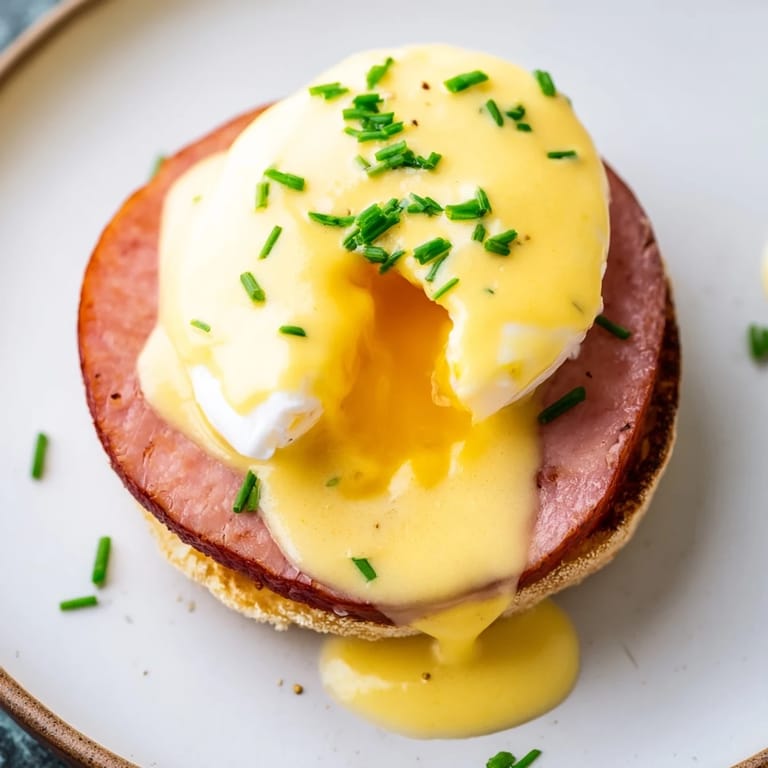
- Place a toasted muffin on the plate, lay the warm bacon on top, settle the poached egg on that, then spoon the hollandaise generously over everything. A sprinkle of chives or parsley on top is nice if you have it, but it's already perfect without.
 Pin it
 There was a morning when my hollandaise split right before serving, and instead of panicking, I just started over with fresh yolks and a little cold water, whisking gently until it came back together. That moment taught me that even small mistakes in the kitchen don't have to be disasters—sometimes they're just part of learning to cook with confidence.
Making Hollandaise Less Scary
The thing about hollandaise is that it has a reputation for being temperamental, but really it's just egg yolks and butter having a conversation. The yolks need to be warm enough to accept the butter, the butter needs to go in slowly enough that the yolks can keep up, and the whole thing needs to stay just warm enough to flow beautifully but not so hot that it curdles. I keep my double boiler water at a gentle, barely-there simmer, and I add my butter in a thin stream while whisking constantly—sometimes I even stop pouring for a moment to whisk faster if I feel like it's getting too thick.
The Poaching Technique That Actually Works
Poaching an egg is mostly about water management and patience. I learned early on that you need enough vinegar in the water to help the egg whites set quickly, but you also need to be gentle about it—literally creating a whirlpool with your spoon and sliding the egg into the calm center makes all the difference. I crack each egg into a small bowl first so I can gently pour it in rather than risking a splashy drop.
Building Your Perfect Brunch Plate
The assembly is where you get to feel like a chef, layering warm elements that all come together in one beautiful bite. Everything should be warm when it hits the plate—cold hollandaise on a warm egg is disappointing, so I time my poaching to finish just as I'm setting everything else up. The English muffin base keeps everything from sliding around, the bacon adds that salty note, the egg yolk adds richness, and the hollandaise ties it all together like a warm hug on a plate.
- If you're making this for a crowd, you can toast the muffins and warm the bacon ahead, then focus your energy on getting all the eggs poached at the right moment.
- Vegetarian and pescatarian versions are just as delicious—try sautéed spinach (Eggs Florentine) or smoked salmon instead of the Canadian bacon.
- Serve immediately while everything is still warm and the yolk is still runny.
 Pin it
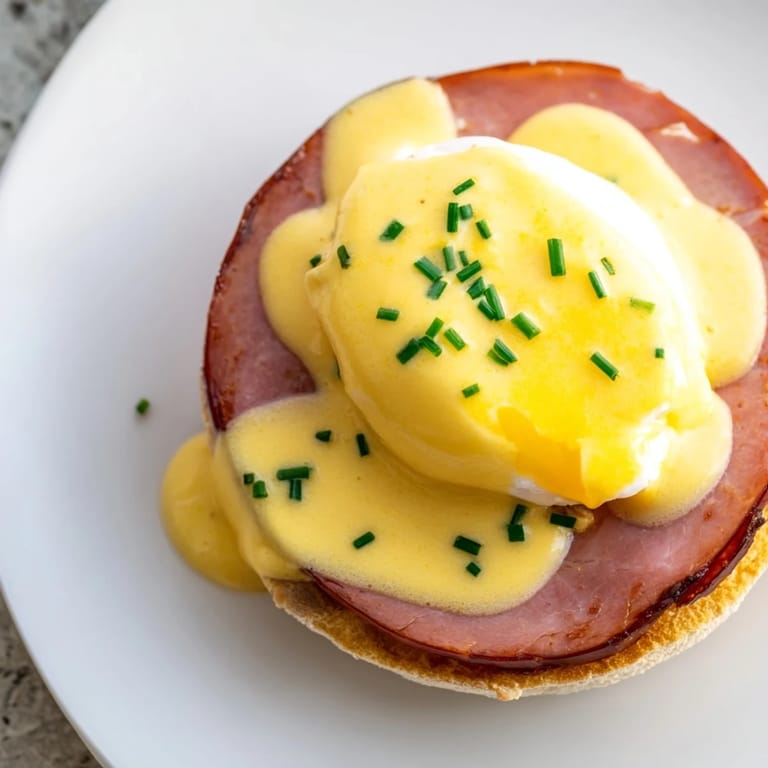
 Eggs Benedict is one of those dishes that reminds me why I love to cook—it brings people together and makes an ordinary morning feel special. Once you get comfortable with it, it becomes your secret weapon for any brunch gathering.
Recipe Questions & Answers
- → How do you poach eggs perfectly for this dish?
Use gently simmering water with a splash of white vinegar. Create a gentle vortex and slide eggs in individually. Poach for 3–4 minutes until whites set and yolks remain runny.
- → What’s the best way to make smooth hollandaise sauce?
Whisk egg yolks and lemon juice over simmering water until thickened, slowly add warm melted butter while whisking constantly. Add Dijon mustard and cayenne to taste, then keep warm but not hot to avoid curdling.
- → Can I substitute Canadian bacon with other proteins?
Yes, smoked salmon or sautéed spinach make excellent alternatives for pescatarian or vegetarian preferences while maintaining rich flavor contrasts.
- → How do you keep the muffins crisp and warm?
Lightly butter the English muffins before toasting until golden brown. This adds flavor and a crisp texture while keeping them warm until serving.
- → What herbs complement this dish well?
Chopped chives or parsley add a fresh, mild herbaceous note and provide a pleasant color contrast to the creamy sauce.