 Pin it
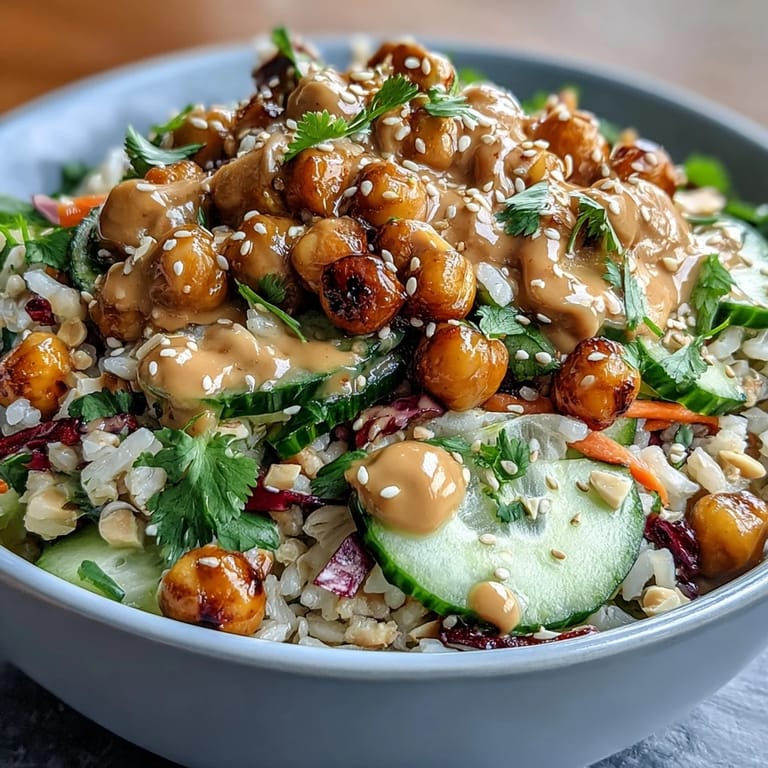
 There's something wonderfully grounding about assembling a bowl where every component has its own texture and purpose. I discovered this peanut chickpea rice bowl on a Tuesday afternoon when my pantry felt sparse but my hunger felt genuine, and somehow those humble ingredients turned into something that tasted like a deliberate choice rather than a compromise. The combination of nutty peanut butter with fresh vegetables and chewy chickpeas struck me as the kind of meal that could work for a quick lunch or an impressive dinner when friends drop by unexpectedly.
I made this for my partner one evening when they mentioned craving something Asian-inspired but also completely plant-based, and watching them ask for seconds without knowing beforehand how simple the ingredients were felt like winning a small kitchen victory. The bowl sits beautifully on the plate too, all those colors arranged together, which turned out to matter more than I expected when eating something nourishing.
Ingredients
- Brown rice (1 cup): Use this instead of white rice for a nuttier flavor and staying power that keeps you satisfied longer; rinsing it first removes excess starch and prevents gumminess.
- Water (2 cups) and salt (1/4 tsp): The ratio matters more than you'd think, and that pinch of salt brings out the grain's natural sweetness.
- Cooked chickpeas (1 1/2 cups): Canned chickpeas work beautifully here and save you hours; drain and rinse them well to remove the starchy liquid that can make the bowl feel heavy.
- Roasted unsalted peanuts (1/2 cup): The roasting matters because it deepens the flavor, and keeping them unsalted lets the dressing's saltiness take the lead.
- Shredded carrot (1 cup): The sweetness from raw carrots balances the savory dressing perfectly, and shredding them thin means they soften slightly when dressed.
- Shredded red cabbage (1 cup): This gives you a satisfying crunch that doesn't soften even after sitting in the dressing, plus those deep colors make the bowl feel intentional.
- Thinly sliced cucumber (1 cup): Cucumber keeps things fresh and cooling, especially if you're eating this on a warm day or serving it chilled.
- Sliced scallions (2): The raw bite from scallions cuts through the richness of the peanut dressing in the best way possible.
- Fresh cilantro leaves (1/4 cup, optional): This is optional but it adds an herbal brightness that makes people wonder what secret ingredient you used.
- Creamy peanut butter (3 tbsp): Choose a brand without added sugar or oil separation issues; the creamier versions whisk smoother into dressing.
- Soy sauce (2 tbsp): Use tamari if you're feeding anyone gluten-free; the difference in saltiness between brands is real, so taste as you go.
- Maple syrup or honey (1 tbsp): This balances the saltiness and adds body to the dressing without making it cloying.
- Rice vinegar or lime juice (1 tbsp): The acid brightens everything; lime juice makes it more vibrant if you have it.
- Sesame oil (1 tsp): A little goes a long way, and this ingredient is what transforms the dressing from simple to sophisticated.
- Warm water (1 to 2 tbsp): Add this gradually until the dressing flows easily but still clings to the vegetables rather than pooling.
- Grated fresh ginger (1/2 tsp): Fresh ginger brings a warmth and complexity that ground ginger can't replicate; grate it just before using for the best flavor.
- Minced garlic (1 small clove): One small clove is plenty since garlic can overwhelm everything else; mince it fine so it distributes evenly.
- Chili flakes (pinch, optional): This gives you a subtle heat that builds as you eat rather than hits all at once.
Tired of Takeout? 🥡
Get 10 meals you can make faster than delivery arrives. Seriously.
One email. No spam. Unsubscribe anytime.
Instructions
- Rinse and start your rice:
- Run the brown rice under cold water in a fine mesh strainer, stirring gently with your fingers until the water runs mostly clear. This removes the starch coating that would otherwise make the grains stick together in a clump.
- Combine and simmer:
- Pour the rinsed rice into a medium saucepan with the water and salt, bring it to a rolling boil, then drop the heat low and cover tightly. Let it sit undisturbed for 30 to 35 minutes until the water absorbs and the grains turn tender but still have a slight chew to them.
- Rest and fluff:
- Once the rice is cooked, remove it from heat and let it sit covered for 5 minutes, which allows the steam to finish cooking the center grains. Fluff it gently with a fork, breaking up any clumps.
- Build your dressing while rice cooks:
- In a small bowl, whisk together the peanut butter, soy sauce, maple syrup, rice vinegar, sesame oil, ginger, garlic, and chili flakes until mostly smooth. Add warm water one tablespoon at a time, whisking between additions, until the dressing has a pourable but clingy consistency that coats the back of a spoon.
- Prepare your vegetables with intention:
- Shred the carrot and red cabbage using a box grater or food processor, slice the cucumber into thin matchsticks, thinly slice the scallions on a diagonal, and roughly chop the cilantro if you're using it. Keeping everything at different thicknesses creates an interesting texture experience as you eat.
- Assemble each bowl with care:
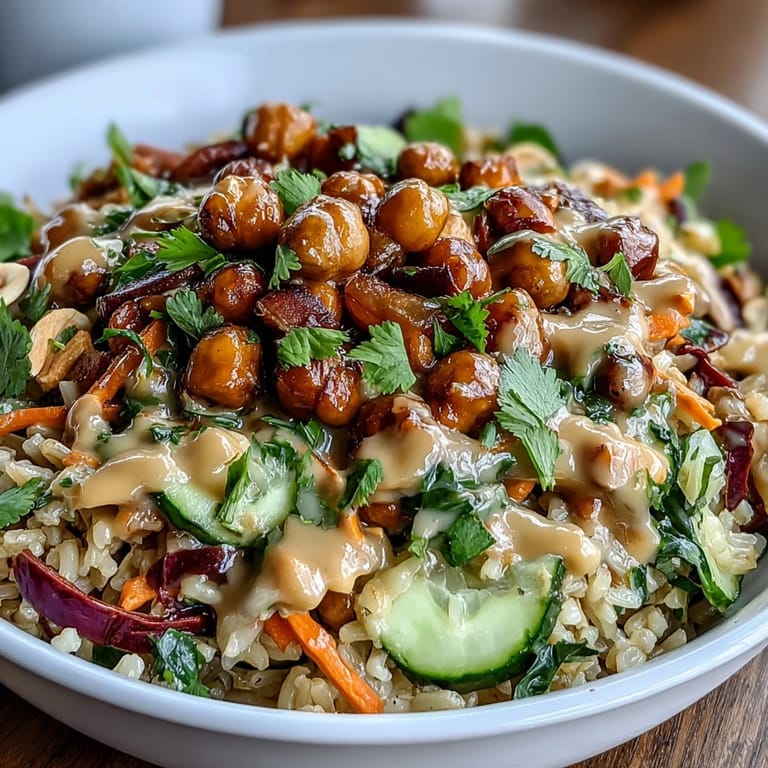
- Divide the warm rice among four bowls, creating a small well in the center. Top each with a portion of chickpeas, peanuts, carrot, cabbage, cucumber, and scallions, arranging them in sections so diners can see what they're about to eat.
- Dress generously and finish:
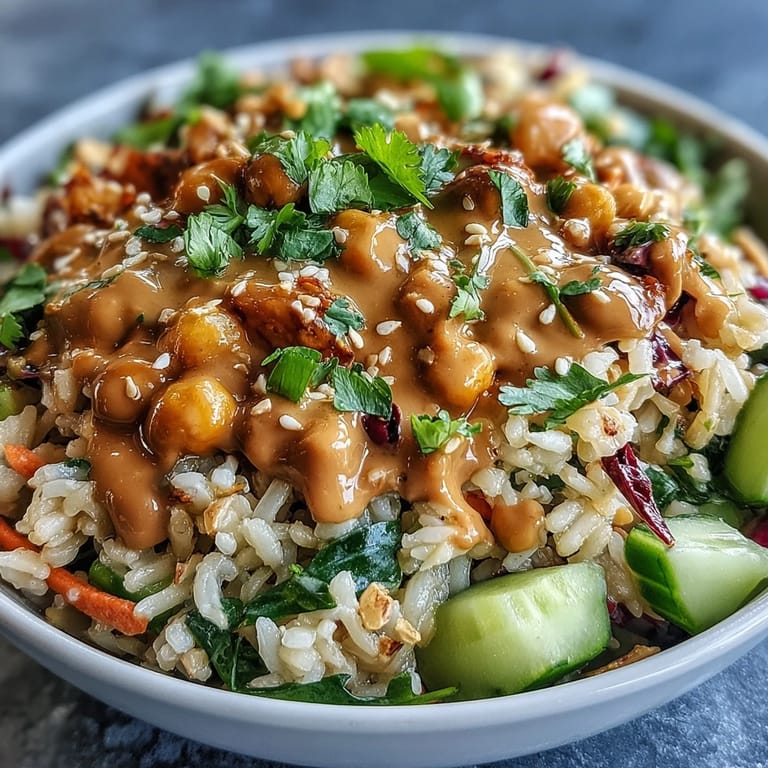
- Drizzle the peanut dressing over each bowl in a wide arc, letting it pool slightly around the rice. Garnish with cilantro and a few extra peanuts if you have them, then serve immediately while everything is at its best.
 Pin it
 I served this bowl to someone who'd just gone vegan, and they got a little quiet while eating, then asked for the recipe because it didn't feel like deprivation but rather like abundance. That moment reminded me that nourishing food doesn't need to announce itself as healthy or righteous; it just needs to taste genuinely good.
Why the Peanut Dressing Makes All the Difference
The magic of this bowl lives in that creamy, tangy dressing that brings every component together. Without it, you'd have a nutritious pile of separate ingredients, but with it, everything transforms into something cohesive and craveable. The peanut butter provides richness and body, the soy sauce adds umami depth, the ginger and garlic give you complexity, and the acid from vinegar or lime juice prevents it from tasting heavy or one-dimensional. I've experimented with substituting other nut butters, and while almond butter works in a pinch, peanut butter is the only one that creates that particular creamy cling that coats each bite.
Making This Bowl Your Own
The beauty of a bowl format is how forgiving it is when you want to improvise based on what's in your kitchen or what you're craving. I've added roasted bell peppers, steamed edamame, shredded daikon, avocado slices, and even crispy tofu when I had it on hand, and every variation felt natural and intentional. The dressing is stable enough to carry whatever vegetables you choose, and the chickpeas and peanuts provide enough protein that you could skip additions without the bowl feeling incomplete. Seasonal vegetables work especially well here, which is why this became a year round rotation for me rather than a one-off recipe.
Serving and Storage Strategies
This bowl can be served warm immediately after assembly, which is how I prefer it when the rice is freshly fluffed and steaming slightly. If you're meal prepping or making this ahead, assemble everything except the dressing and store it in the refrigerator, then toss with dressing just before eating so the vegetables stay crisp and the rice doesn't dry out. The chickpeas and peanuts stay crunchy even after a day in the fridge, which makes this a genuinely viable lunch box option if you pack the dressing separately.
- The dressing keeps for three days refrigerated: Let it come to room temperature before whisking if it's been cold, since sesame oil stiffens slightly when chilled.
- Warm rice and cold vegetables actually complement each other beautifully: Many people find the contrast of temperatures more interesting than having everything at the same temperature.
- Transport the dressing in a small jar and dress the bowl just before eating: This prevents the vegetables from getting waterlogged during your commute to work or a picnic.
 Pin it
 This peanut chickpea rice bowl became the kind of meal I make when I want something that feels both intentional and effortless, and that's become increasingly rare and precious. I hope it becomes one of those recipes you return to whenever you need nourishment that tastes like caring.
Recipe Questions & Answers
- → Can I make this bowl gluten-free?
Simply replace regular soy sauce with tamari in the peanut dressing. All other ingredients including brown rice, chickpeas, peanuts, and fresh vegetables are naturally gluten-free.
- → How long does this keep in the refrigerator?
Components stay fresh for 4-5 days when stored separately in airtight containers. For best results, store dressing apart from the assembled bowls and drizzle just before serving.
- → What other vegetables work well in this bowl?
Bell peppers, edamame, shredded Brussels sprouts, snap peas, or roasted sweet potatoes complement the peanut flavors beautifully. Use whatever fresh produce you have on hand.
- → Can I use a different grain instead of brown rice?
Quinoa, farro, jasmine rice, or even noodles work wonderfully as base alternatives. Adjust cooking times accordingly and aim for about 1 cup cooked grain per serving.
- → Is the peanut dressing spicy?
The dressing has mild warmth from optional chili flakes and fresh ginger. For more heat, add sriracha, crushed red pepper, or fresh jalapeño to taste.
- → Can I add protein beyond chickpeas?
Grilled tofu, shredded chicken, or teriyaki salmon pair excellently with the peanut flavors. For extra plant-based protein, add hemp seeds or roasted edamame.