 Pin it
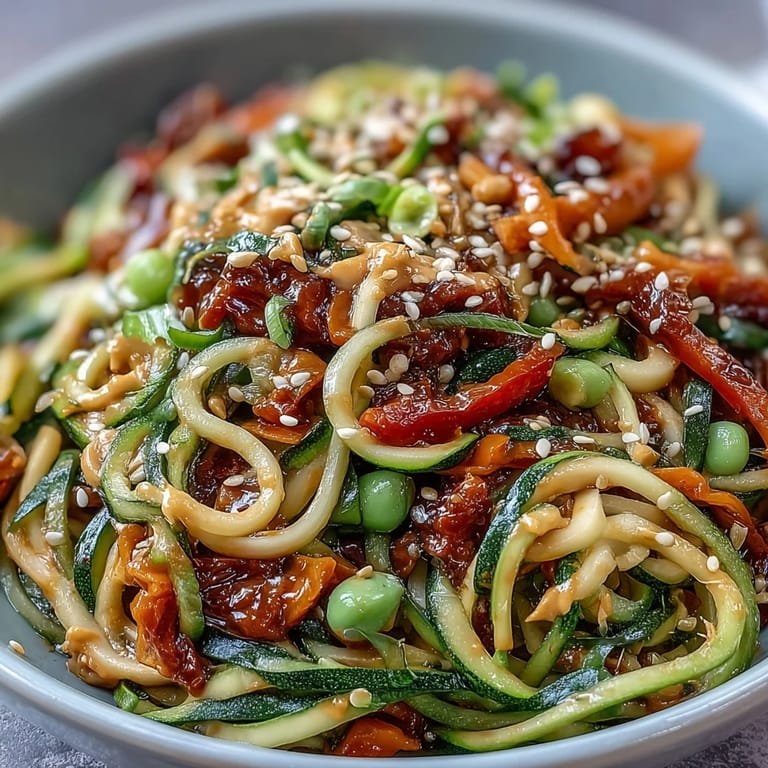
 There's something almost meditative about spiralizing zucchini—the satisfying whirl of the blade, watching those green ribbons pile up in the bowl. I discovered this stir-fry on a Tuesday afternoon when my fridge held more vegetables than ideas, and I wanted something that felt both indulgent and light. The peanut sauce changed everything, turning simple spiralized vegetables into something that tasted like deliberate cooking rather than last-minute improvisation.
I made this for my sister last summer when she was visiting and had just started eating mostly plant-based. She took one bite and looked genuinely surprised, like she'd been expecting deprivation but found something she actually wanted seconds of. We sat on the back porch eating it straight from our bowls, and she asked for the recipe before she'd even finished. That moment made me realize how food can quietly shift someone's perspective without any announcement or pressure.
Ingredients
- Spiralized zucchini (4 medium, about 6 cups): The foundation of this dish, and the secret is not to overthink it—a spiralizer costs almost nothing and saves you from sad, mushy vegetable noodles that come from cooking zucchini the traditional way.
- Red bell pepper (1 large, thinly sliced): This brings both sweetness and that slight char you want when everything hits the hot skillet, so don't skip it for another color.
- Carrot (1 large, julienned or spiralized): Adds natural sweetness and texture that keeps the dish from feeling one-dimensional.
- Snap peas (1 cup, trimmed and halved): They stay crisp even with minimal cooking, which is exactly what you're after here.
- Green onions (2, thinly sliced): Fresh and mild, they brighten everything right at the end without overpowering.
- Natural peanut butter (1/3 cup): Check the label—you want the kind where peanuts are the only ingredient listed, no added oils or sugar to water down the sauce.
- Low-sodium soy sauce or tamari (2 tablespoons): This is your umami anchor, the thing that makes the sauce taste intentional and complete rather than like peanut butter with seasonings thrown in.
- Rice vinegar (1 tablespoon): Cuts through the richness with a whisper of sharpness that balances everything perfectly.
- Lime juice (1 tablespoon, from about half a lime): Fresh is essential here—bottled lime juice tastes like giving up, and this dish deserves better.
- Maple syrup or honey (1 tablespoon): Just enough sweetness to make the sauce feel complete without tipping into dessert territory.
- Toasted sesame oil (2 teaspoons): Use the toasted kind, not the clear stuff—the flavor difference is the difference between mediocre and memorable.
- Garlic (2 cloves, minced) and ginger (1 teaspoon, grated): These two create an invisible layer of warmth that makes people wonder what they're tasting without being able to name it.
- Warm water (2 to 4 tablespoons, added gradually): Controls the sauce consistency—too thick and it clumps, too thin and it slides off the noodles, so you adjust as you go.
- Red pepper flakes (1/2 teaspoon, optional): For when you want the sauce to whisper a warning before the warmth settles in.
Tired of Takeout? 🥡
Get 10 meals you can make faster than delivery arrives. Seriously.
One email. No spam. Unsubscribe anytime.
Instructions
- Prep everything first:
- Spiralize your zucchini and carrot, slice the bell pepper into thin strips, halve the snap peas, and chop your green onions. Laying everything out before you heat the pan means you can actually enjoy the cooking part instead of frantically chopping while something burns.
- Build the peanut sauce:
- Whisk together the peanut butter, soy sauce, rice vinegar, lime juice, maple syrup, sesame oil, minced garlic, and grated ginger in a bowl. Start with 2 tablespoons of warm water and whisk until smooth, then add more water a tablespoon at a time until the sauce flows like a light gravy—you're aiming for pourable, not thick enough to stand a spoon in.
- Get your pan screaming hot:
- Place a large nonstick skillet or wok over medium-high heat and let it actually get hot before you add anything. A splash of sesame oil is optional but gives the whole dish an extra layer of toasted flavor.
- Cook the sturdy vegetables first:
- Add the bell pepper, carrot, and snap peas to the hot pan and stir-fry for 2 to 3 minutes. You want them to have a little color and still maintain their snap—they'll continue cooking slightly after you pull everything together.
- Add the zucchini noodles gently:
- Toss in your spiralized zucchini and cook for 2 to 3 minutes, stirring gently and frequently. This is the critical moment—zucchini releases water when you cook it, so the goal is heated through, not wilted into submission.
- Marry everything with sauce:
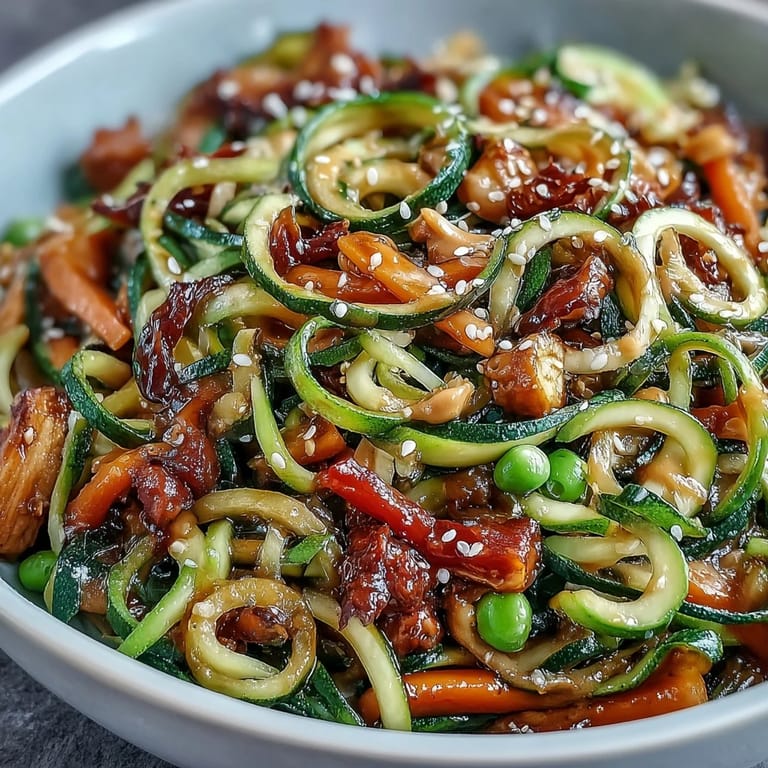
- Pour the peanut sauce over the vegetables and toss constantly for 1 to 2 minutes until every strand is coated and warmed through. Everything should glisten and smell like something you'd order at a place with a long wait.
- Serve immediately:
- Transfer to plates or bowls right away, then crown with chopped roasted peanuts, fresh cilantro, and more green onions. The moment you finish cooking is the best moment to eat it.
 Pin it
 My neighbor stopped me at the mailbox one evening and mentioned she'd made this because she'd overheard me talking about it, and now it was something she served when friends came over. It struck me that cooking isn't always about the meal in front of you—sometimes it's about the quiet way food travels between people and becomes part of someone else's routine.
How to Make the Sauce Actually Taste Like a Restaurant
The peanut sauce is where this dish either sings or falls flat, and the difference comes down to one thing: balance. You need sweetness, saltiness, acid, fat, and heat all working in conversation with each other, not fighting. If you taste it and it feels one-dimensional, that's your signal that something's missing. Taste as you build it, adjusting one element at a time, and you'll develop an instinct for what makes it click.
Why Spiralized Vegetables Change the Game
There's something psychologically satisfying about eating vegetable noodles that look like actual noodles. Beyond that, they cook faster, stay crisp with minimal effort, and somehow taste lighter than chopped vegetables, even though they're the same ingredient. Once you own a spiralizer, this becomes something you make regularly because it feels like less cooking and more playing with food.
Making This Your Own
The beauty of this dish is that it's infinitely flexible once you understand the formula. The vegetables can shift based on what you have—mushrooms, broccoli, bok choy, or asparagus all work beautifully. The sauce stays the same, which means you're never starting from scratch. Protein-wise, grilled tofu, shredded rotisserie chicken, or quick-cooked shrimp all nestle into this dish like they were always meant to be there.
- Swap the peanut butter for almond or cashew butter if you want something slightly lighter, or sunflower seed butter if you're avoiding tree nuts.
- Add a poached egg on top for richness and extra protein, or a handful of cooked chickpeas for texture and substance.
- Make a double batch of the sauce and keep it in the fridge for three days—it's not just for zucchini noodles, but for grain bowls, wraps, or straight-up as a dipping sauce.
 Pin it
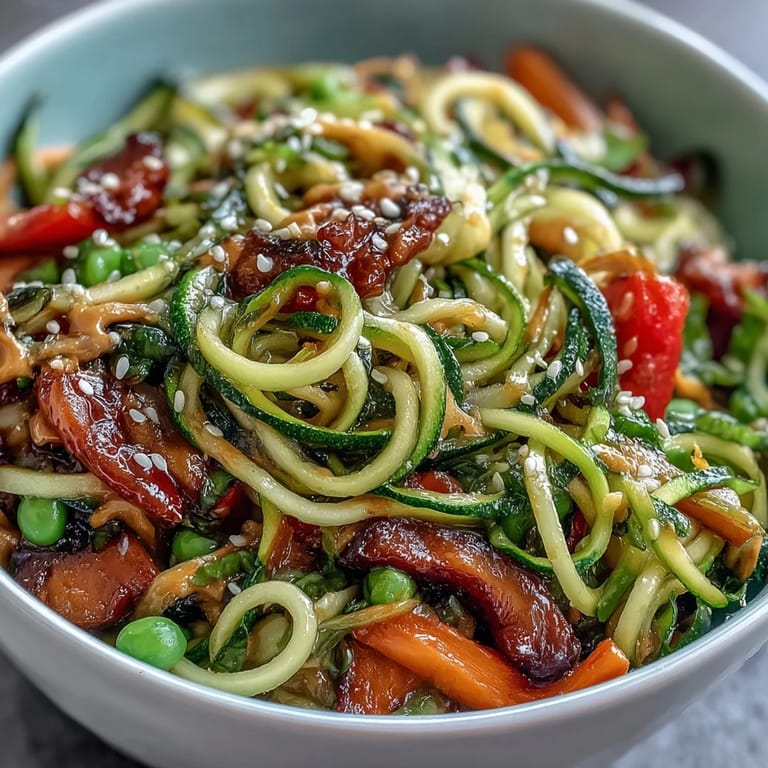
 This is the kind of recipe that quietly becomes a regular in your rotation because it asks so little and gives so much. Once you've made it a few times, you'll stop consulting the recipe and start cooking it with your hands and your instincts.
Recipe Questions & Answers
- → How do I prevent zucchini noodles from becoming soggy?
Cook zucchini noodles briefly over medium-high heat, just until warmed through. Avoid overcooking to keep their texture crisp and fresh.
- → Can I substitute peanut butter in the sauce?
Yes, almond or cashew butter work well for a nut variation, while sunflower seed butter suits peanut-free needs.
- → What vegetables pair well in this stir-fry?
Bell peppers, carrots, snap peas, and green onions add crunch and color. Mushrooms or broccoli can be added for variety.
- → Is this dish suitable for gluten-free diets?
Use tamari or a gluten-free soy sauce alternative to keep it gluten-free without compromising flavor.
- → How can I make this dish more protein-rich?
Topping with grilled tofu, chicken, or shrimp provides extra protein to complement the vegetables and sauce.