 Pin it
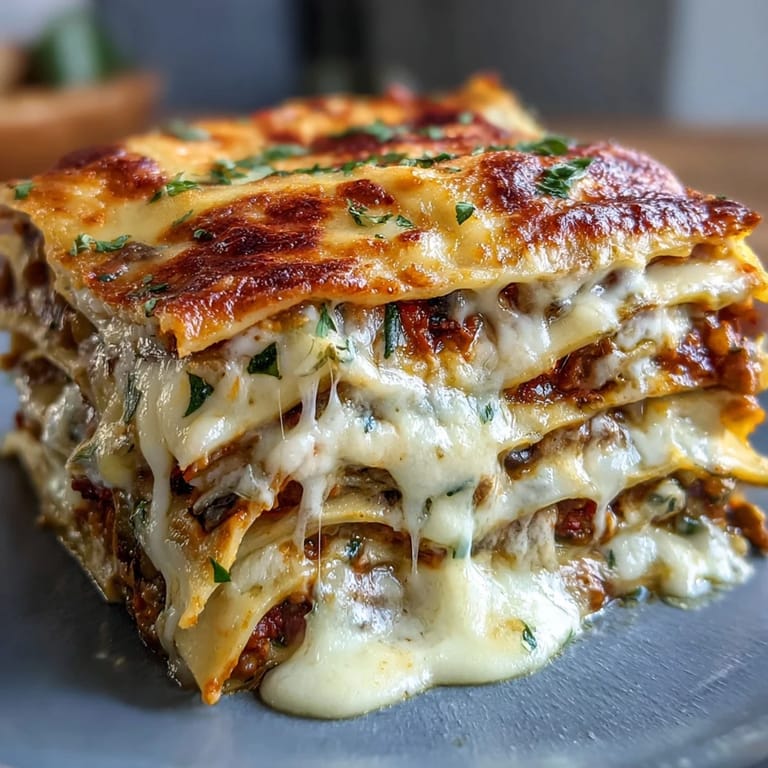
 There's something about the smell of smoked paprika hitting hot oil that makes you stop and pay attention. I discovered this one-pan lasagne on a Tuesday evening when I had mushrooms going soft in the crisper drawer and absolutely no patience for the traditional three-pot method. What started as a kitchen necessity turned into the kind of dish that somehow feels both deeply comforting and impressively put-together, all while living in a single ovenproof pan.
I made this for my partner on a rainy Sunday, and watching them take that first bite and then immediately go back for seconds without saying a word told me everything. They came to the kitchen, peered into the pan still bubbling at the edges, and asked if this was actually something I'd invented or just pretending I had. That's when I knew it had crossed over from dinner into something memorable.
Ingredients
- Olive oil: Two tablespoons creates the foundation for everything, so don't skimp or use the cheap stuff that smells like nothing.
- Onion and garlic: One large onion finely chopped and two minced garlic cloves build the aromatic base that makes people ask what you're cooking from the next room.
- Carrot, red bell pepper, mushrooms, and courgettes: These four vegetables together (250g mushrooms, one diced carrot, one red pepper, two medium courgettes) create layers of texture and sweetness that balance the smokiness.
- Smoked paprika: This is the star—one teaspoon gives the entire dish its signature warmth and depth, so resist the urge to swap it for regular paprika.
- Dried oregano and thyme: One teaspoon oregano and half a teaspoon thyme whisper herbal notes without overwhelming the smoky flavors.
- Chili flakes: Optional half teaspoon, but a tiny pinch adds a gentle heat that sneaks up on you.
- Tomato paste and canned tomatoes: One tablespoon paste and one 400g can of chopped tomatoes create the sauce's body and acidity.
- Soy sauce: One tablespoon adds umami depth that makes the lentils taste more substantial.
- Red lentils: 125g dried, rinsed lentils absorb all those flavors and dissolve slightly into the sauce, thickening it naturally.
- Vegetable stock: 500ml keeps everything moving during the simmer and prevents the sauce from drying out.
- Butter and flour: 40g each for the béchamel base that becomes silky and indulgent.
- Whole milk: 600ml whisked gradually into the roux prevents lumps and creates creaminess.
- Ground nutmeg: A quarter teaspoon in the béchamel is barely perceptible but transforms it from good to haunting.
- Cheddar or hard vegetarian cheese: 60g grated into the béchamel adds sharpness and helps it set properly.
- No-boil lasagne sheets: 9 to 12 sheets depending on your pan's depth, and they cook perfectly from the moisture in the sauces.
- Mozzarella or vegetarian cheese: 50g for topping browns beautifully and creates those golden bubbles you crave.
- Fresh basil: Optional but transforms the dish from hearty to elegant when scattered over warm plates.
Tired of Takeout? 🥡
Get 10 meals you can make faster than delivery arrives. Seriously.
One email. No spam. Unsubscribe anytime.
Instructions
- Heat your oven and start the base:
- Set your oven to 200°C (180°C fan). While it preheats, heat two tablespoons of olive oil in your large ovenproof pan over medium heat and watch it shimmer slightly before adding the chopped onion and minced garlic. After two minutes, when the onion turns translucent and the garlic releases its aroma, you'll know you're on the right track.
- Build layers of flavor with the vegetables:
- Stir in the diced carrot, red pepper, chopped mushrooms, and courgettes, letting them soften for five to six minutes while you listen to them gently sizzle. You're not trying to caramelize them—just enough heat to draw out their water and start softening their edges.
- Toast the spices and paste:
- Sprinkle in the smoked paprika, oregano, thyme, and chili flakes, then add the tablespoon of tomato paste. Stir constantly for one minute so the spices bloom in the oil and the paste caramelizes slightly, releasing its concentrated tomato flavor into the pan.
- Simmer the lentil sauce:
- Pour in the canned tomatoes, soy sauce, rinsed red lentils, and vegetable stock, stirring well. Bring it to a simmer, cover the pan loosely with foil, and let it cook for fifteen to twenty minutes, stirring occasionally, until the lentils soften and the sauce thickens enough that a spoon dragged through it leaves a trail. Taste and adjust salt and pepper—this is your moment to make it taste like you meant it.
- Make the béchamel while the sauce simmers:
- In a separate medium saucepan over medium heat, melt forty grams of butter until it froths gently. Stir in forty grams of flour immediately and cook for one minute, stirring constantly so it becomes a pale, smooth paste. Gradually whisk in six hundred millilitres of whole milk, pouring slowly and whisking constantly to prevent lumps, then keep stirring for about five minutes until it thickens enough to coat the back of a spoon. Remove from heat, stir in the nutmeg and grated cheddar until melted, then season with salt and white pepper.
- Prepare for assembly:
- When the lentil sauce is ready, carefully remove half of it from the pan and set it aside in a bowl. You'll now have a single layer of sauce remaining in the pan—this is your foundation.
- Layer the first section:
- Spoon one-third of the béchamel over the remaining lentil sauce in the pan, spreading it gently but not worrying about perfect coverage. Arrange a layer of no-boil lasagne sheets over the sauce, breaking them to fit snugly into corners and overlapping slightly as they settle.
- Build the middle:
- Spread half of your reserved bolognese over the pasta layer, then pour another third of the béchamel over that, followed by another layer of lasagne sheets broken to fit.
- Top with intention:
- Distribute the remaining bolognese over the final layer of pasta, then pour the last of the béchamel across the top, spreading it to the edges. Sprinkle fifty grams of grated mozzarella evenly over everything so it browns when baked.
- Bake covered then uncovered:
- Loosely cover the pan with foil—you want a little steam to escape—and bake for twenty-five minutes until the edges start bubbling. Remove the foil and bake another ten to fifteen minutes until the top is golden brown and the sauce bubbles around the edges, which means it's hot all the way through.
- Rest before serving:
- Let the lasagne stand for ten minutes before cutting and serving. This allows the layers to set just enough that they don't collapse onto the plate, and it lets the temperature even out so you won't burn your mouth on molten cheese.
 Pin it
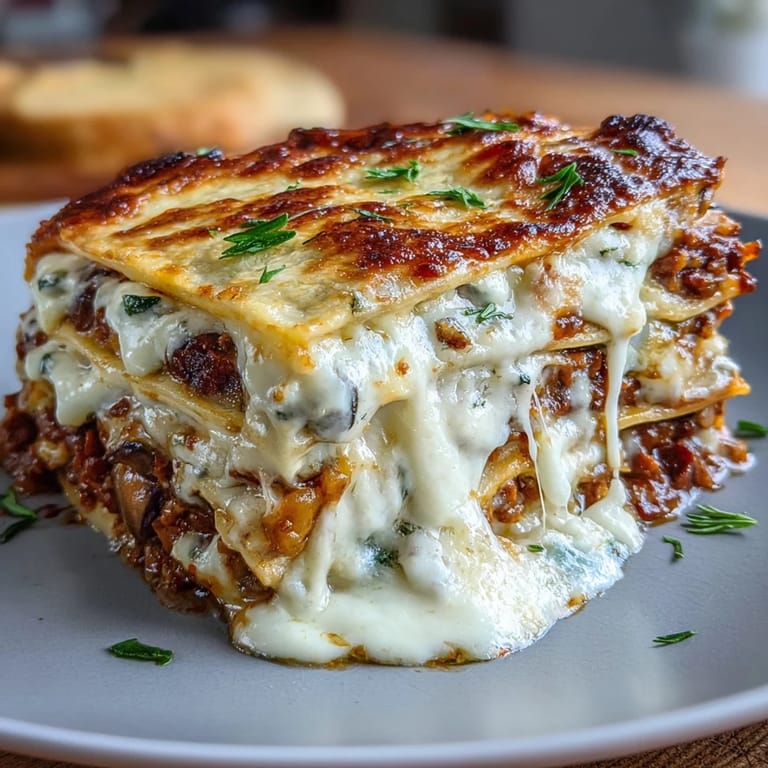
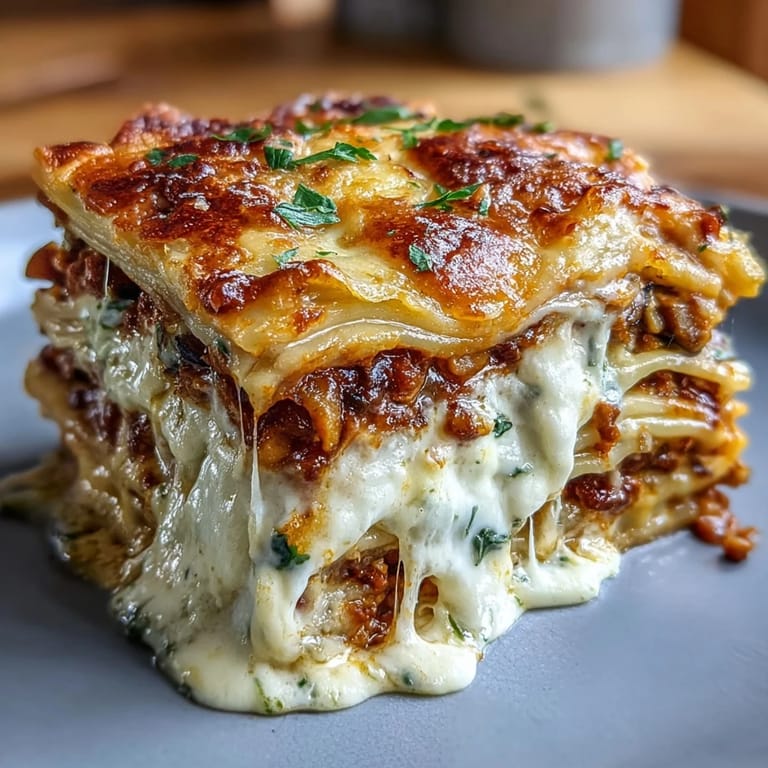
 There was a moment during the resting phase when my kitchen filled with this gentle steam rising from the pan, and I could see the béchamel had turned this amber-gold color from the cheese, and suddenly the dish became more than just something to eat. It became a small edible proof that you can take limitations—one pan, simple vegetables, a pantry full of basics—and turn them into something that feels generous and thoughtful.
Why the Smoky Flavor Works
Smoked paprika carries a flavor that reminds you of a kitchen from somewhere warmer, somewhere where people cook over open fires. Combined with the natural umami from soy sauce and the earthiness of lentils, it creates a depth that traditional vegetarian lasagne often lacks. The smoke sits underneath everything else, making the tomatoes taste more like tomatoes and the herbs taste more like themselves.
About No-Boil Lasagne Sheets
When I first used no-boil sheets, I was skeptical that they'd actually cook in the oven rather than turn into cardboard. The secret is that they need moisture and time, which this recipe provides in abundance through two sauces and a covered bake. By the twenty-five minute mark, they've absorbed enough liquid to soften without becoming mushy, and the final uncovered fifteen minutes lets them crisp slightly at the edges while staying tender where they matter.
Making It Vegan or Dairy-Free
The beauty of this recipe is that it adapts gracefully if you need it to. Swap the butter for vegan butter in equal amounts, use unsweetened plant milk instead of whole milk, and choose a vegan hard cheese that melts properly like one made from nuts or starch. The béchamel becomes slightly less rich but still silky, and the mozzarella top browns and bubbles just the same.
- Vegan butter needs the same gentle heating as regular butter, so don't rush the roux.
- Plant milks vary in thickness, so whisk more slowly and watch the béchamel as it thickens.
- Check that your soy sauce is certified gluten-free if that matters for your table, or use tamari as a safer choice.
 Pin it
 This lasagne has become the kind of dish I make when I want to feed people something that feels nourishing without announcing how much effort went into it. It's comfortable enough to eat on a quiet Tuesday night and impressive enough to serve when someone's coming to dinner and you want them to feel cared for.
Recipe Questions & Answers
- → Can I make this lasagne ahead of time?
Absolutely. Assemble the complete dish up to 24 hours in advance, cover tightly, and refrigerate. You may need to add 10-15 minutes to the baking time if cooking from cold. Alternatively, bake completely and reheat portions in the microwave or oven.
- → What can I substitute for the red lentils?
Green or brown lentils work, though they'll need longer cooking and won't break down quite as much. For a grain-free option, try extra vegetables or plant-based mince. Cooked chickpeas could also be used for texture variation.
- → Is it necessary to use no-boil lasagne sheets?
No-boil sheets are ideal as they absorb moisture from the sauce during baking. If using traditional lasagne, par-boil them according to packet instructions before layering. Fresh pasta sheets also work beautifully and may require slightly less baking time.
- → How do I know when the lasagne is properly cooked?
The lasagne is ready when the cheese topping is golden and bubbling, and you can see the sauce actively bubbling around the edges. A knife inserted into the center should feel hot to the touch. Letting it stand for 10 minutes is crucial—it helps the layers set for cleaner serving.
- → Can I freeze leftovers?
Yes, this freezes exceptionally well. Cut into portions, wrap individually in foil and freezer-safe wrapping, and freeze for up to 3 months. Thaw overnight in the refrigerator and reheat in a 180°C oven until piping hot throughout.