 Pin it
 There's something almost magical about watching dough transform into pretzels. I discovered this when a friend dragged me to a German market on a cold Saturday morning, the air thick with the smell of yeast and caramel. I bought one pretzel, then another, and by the time I got home I was determined to figure out how they made them taste like they'd been twisted by hand in some cozy Bavarian kitchen. Turns out, they had been—and now I could make them too.
I remember the first time I made these for my sister's book club. She was skeptical—pretzels seemed intimidating—but the moment everyone bit into one still warm from the oven, there was this collective sigh of happiness. One woman asked if I'd baked them professionally. I hadn't, but the way they looked and tasted made me feel like I had.
Ingredients
- Bread flour: Don't skimp here; the higher protein content gives you that chewy structure that makes a pretzel actually feel like a pretzel and not just twisted bread.
- Warm water: Temperature matters more than you'd think—too hot kills the yeast, too cold and nothing happens, so use a thermometer if you have one.
- Active dry yeast: Keep it in the fridge after opening and check the expiration date; dead yeast is the fastest way to a sad, flat dough.
- Baking soda bath: This is non-negotiable and honestly the most important step—it's what separates real pretzels from bread shaped like pretzels.
- Coarse pretzel salt: Regular table salt dissolves too fast; the pretzel salt stays crunchy and gives you those satisfying little bursts of salt with each bite.
Tired of Takeout? 🥡
Get 10 meals you can make faster than delivery arrives. Seriously.
One email. No spam. Unsubscribe anytime.
Instructions
- Wake up the yeast:
- Combine warm water, sugar, and yeast in a bowl and let it sit for 5 minutes until it's foamy and alive. If it doesn't foam, your yeast is dead and you need to start over—it's a quick way to know before you waste the rest of your ingredients.
- Build the dough:
- Add butter and salt, then mix in flour one cup at a time until you have a shaggy, messy dough that looks like it barely holds together. Turn it onto a floured surface and knead for 5–7 minutes until it becomes smooth and elastic, pushing with the heel of your hand and folding it back over itself in a rhythm that's oddly meditative.
- First rise:
- Place the dough in an oiled bowl, cover it with a damp towel, and let it sit in a warm spot for about an hour until it's roughly doubled. A warm oven with the light on works perfectly, or prop it on top of your fridge if your kitchen is chilly.
- Prep your station:
- While the dough rises, preheat your oven to 450°F and get a large pot of water with baking soda heating up until it's at a rolling boil. Line two baking sheets with parchment paper—this prevents sticking and makes cleanup almost painless.
- Shape the pretzels:
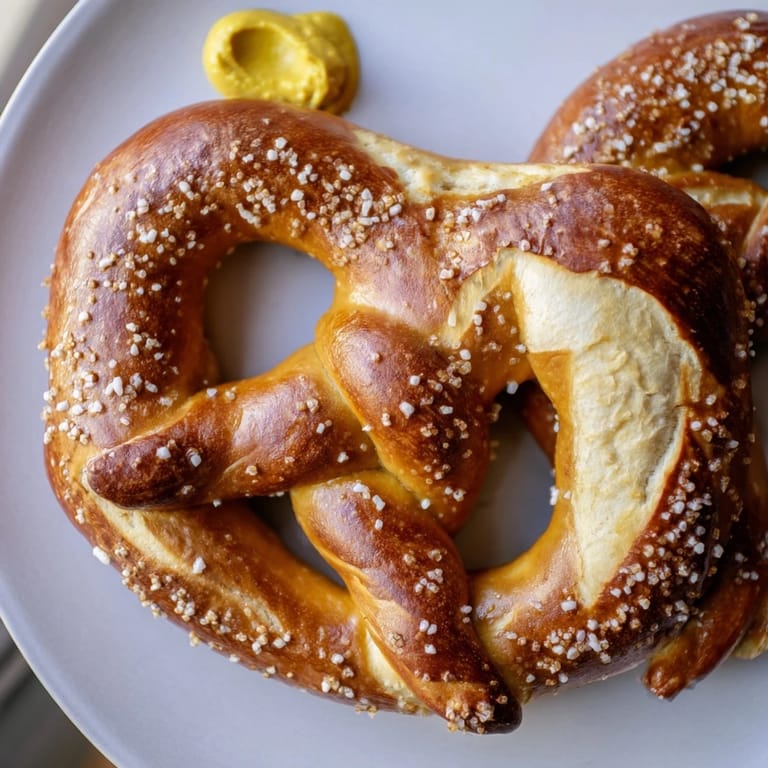
- Divide your risen dough into 8 equal pieces and roll each one into a rope about 20–22 inches long, which sounds long until you realize it's actually pretty easy once you get into a rhythm. Form a U-shape, twist the two ends around each other twice, then fold the twisted ends down and press them into the top curve to form that iconic pretzel silhouette.
- The magic bath:
- This is the moment that changes everything—carefully slide each pretzel into the boiling baking soda water for exactly 30 seconds, then fish it out with a slotted spatula and place it on your prepared sheet. The pretzel will transform slightly, becoming darker and developing that distinctive chewy crust, and the smell will make you understand why you're doing this.
- Finishing touches:
- Brush each pretzel with egg wash (beaten egg yolk mixed with water) and sprinkle immediately with coarse salt while the egg is still wet so it sticks. Don't be shy with the salt—those crunchy crystals are what makes eating a pretzel feel like a complete experience.
- Bake until golden:
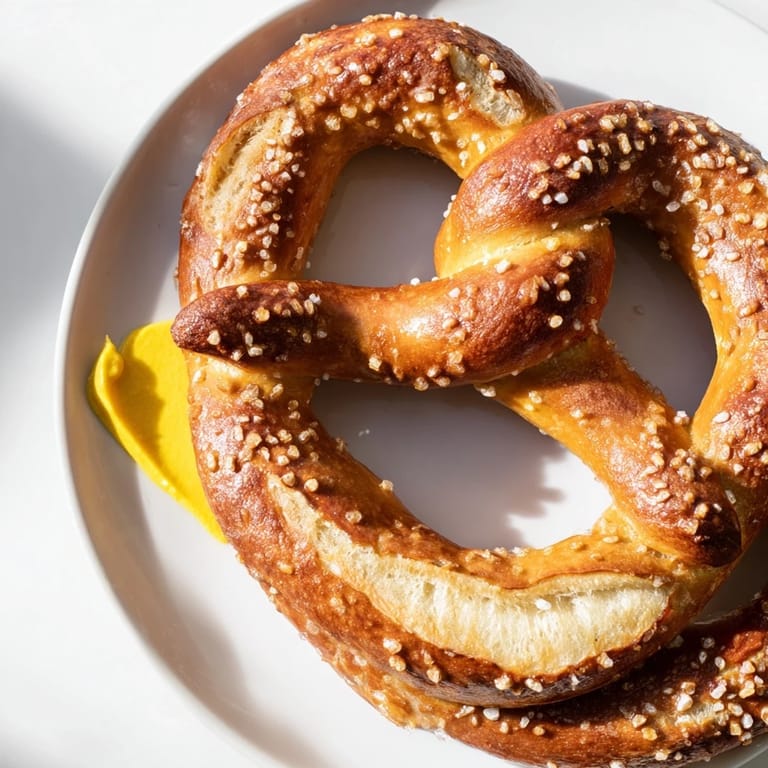
- Bake for 12–15 minutes until they're deep golden brown, rotating your pans halfway through if your oven has hot spots. They'll look almost too dark when they come out, but that's exactly right.
 Pin it
 What struck me most was how quiet everything got when I pulled these from the oven. Everyone stopped talking, just staring at these golden, salty twists. Food can do that sometimes—it makes people present in a way nothing else quite does.
The Perfect Pretzel Shape
The pretzel shape isn't just for looks; it's actually functional. The twisted loop means more surface area gets exposed to that crucial baking soda bath, and the way the ends fold over creates pockets of texture. When I finally got the shape right, everything else fell into place. I'd suggest practicing your first one gently—the dough is forgiving, and once you've done it once, muscle memory takes over and you'll be cranking them out like you've been doing it for years.
Serving and Pairing
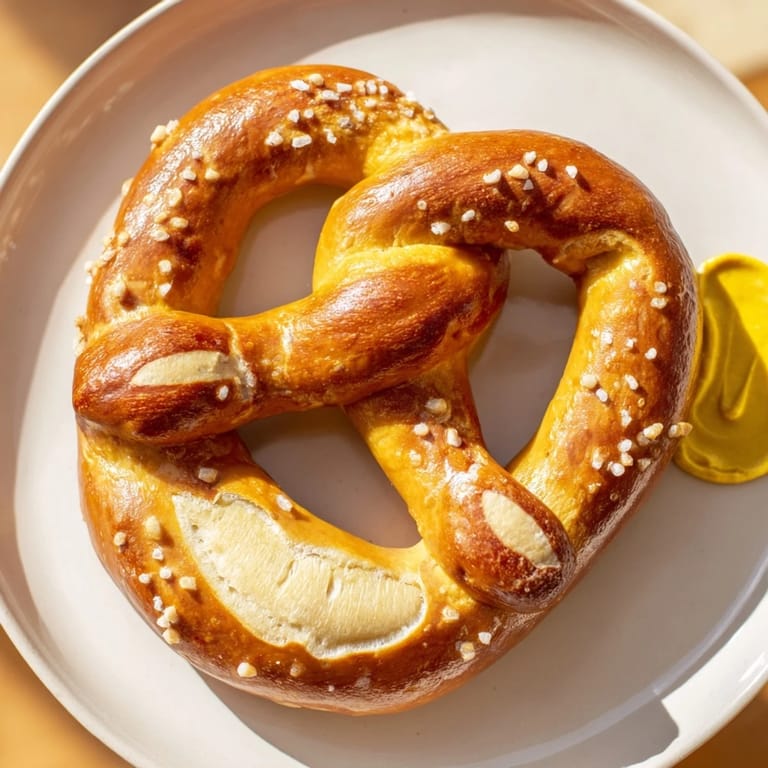
The classic pairing of warm pretzels and mustard exists for a reason—the tangy sharpness cuts through the salt and chewy richness perfectly. But I've found that honey mustard, cheese sauce, or even just eating them plain with a cup of coffee works beautifully too. Serve them fresh and warm if you can; they're still good at room temperature, but there's nothing quite like a pretzel at that five-minute window when it's still steaming and the salt is still crunchy.
Creative Variations
Once you nail the basic pretzel, the variations are endless. I've made cinnamon sugar versions for dessert, topped them with sesame seeds or everything bagel seasoning, and even filled them with cheese before baking. The formula stays the same; you're just playing with toppings and flavor accents. The dough itself is neutral enough to handle almost any direction you want to take it, which is part of why I love this recipe so much—it's a foundation you can build on.
- Brush baked pretzels with melted butter and cinnamon sugar instead of salt for a sweeter version that feels more like a treat than a snack.
- Sprinkle with everything bagel seasoning, sesame seeds, or poppy seeds instead of pretzel salt for a completely different vibe.
- Try serving with warm cheese sauce, honey mustard, or even a spicy aioli if you want to get fancy about it.
 Pin it
 Homemade pretzels have a way of becoming a regular thing once you've made them once. They're impressive enough to feel special but straightforward enough that you'll actually make them again.
Recipe Questions & Answers
- → What helps create the pretzels’ chewy texture?
A combination of bread flour and proper kneading develops gluten, resulting in chewy, tender pretzels.
- → Why dip pretzels in baking soda water before baking?
The baking soda bath creates the characteristic deep brown crust and distinctive flavor by altering the dough’s surface during baking.
- → Can I use other toppings besides coarse salt?
Yes, try sesame seeds, poppy seeds, or cinnamon sugar for different flavor and texture profiles.
- → How do I know when the dough has risen enough?
The dough should double in size after resting about an hour in a warm place, indicating enough fermentation.
- → What’s the best way to serve these pretzels?
Serve warm with tangy mustard or cheese sauce for dipping to enhance their rich, savory taste.
- → Are these pretzels suitable for vegetarians?
Yes, using butter and eggs with no meat, they fit well within a vegetarian diet.