 Pin it
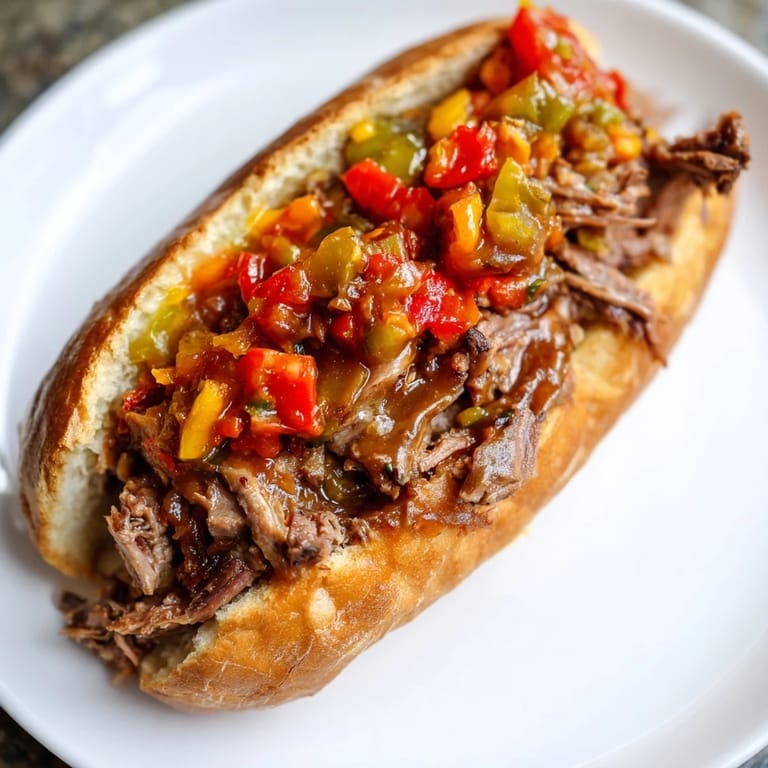
 Years ago, I watched my uncle flip a sandwich onto a plate at a neighborhood Chicago diner, and the au jus pooled around it like liquid gold. He barely said anything—just smiled and picked it up, the bread already soaked dark at the edges. I'd never seen beef so tender it practically melted, piled onto a crusty roll that could actually handle the weight and the juice. That moment changed how I thought about sandwiches entirely. Now whenever I make Italian beef at home, I'm chasing that exact memory: the steam rising, the spicy snap of giardiniera, the satisfying way everything comes together.
I made this for my sister's friends during a snowstorm when everyone was stuck at my place, and something shifted. Watching them hold these sandwiches with both hands, au jus dripping down their wrists, laughing between bites—it stopped being about technique and started being about connection. The kitchen smelled like beef and bay leaf and possibility. That's when I realized this sandwich isn't just food; it's the kind of thing that makes people feel cared for.
Ingredients
- Beef chuck roast (3 lbs): Chuck has enough fat and connective tissue to turn silky when braised long and slow, which is exactly what you want here—tough cuts become tender through time and heat.
- Olive oil (1 tbsp): Just enough to get a proper sear on the beef; don't skip this step or you lose that caramelized depth.
- Kosher salt and black pepper: Season generously before searing—this is your only real seasoning on the meat itself.
- Beef broth and water (3 cups combined): The liquid becomes your liquid gold au jus; homemade broth makes a noticeable difference if you have it.
- Worcestershire sauce (1 tbsp): This adds umami and a subtle tang that rounds out the savory profile without announcing itself.
- Italian seasoning, garlic powder, onion powder: These layer subtle background flavors that make the beef taste like it's been simmering for even longer.
- Red pepper flakes (1/2 tsp, optional): I keep this optional because giardiniera brings the heat, but a whisper of it in the braising liquid adds complexity.
- Bay leaf: This one leaf carries a floral note that keeps everything from tasting flat.
- Italian sandwich rolls or hoagies: Sturdy is non-negotiable—you need a roll that won't disintegrate under the weight and liquid; I prefer ones with a crispy exterior.
- Hot giardiniera (1 1/2 cups, drained): This is your signature finish—the spicy, pickled vegetable condiment that makes it unmistakably Chicago; don't drain it too much or you lose the flavor, but too much liquid and the sandwich gets soggy.
- Roasted sweet bell peppers (optional, 1 cup): These add sweetness that plays beautifully against the spice and salt—I sometimes roast my own, but good jarred ones work too.
Tired of Takeout? 🥡
Get 10 meals you can make faster than delivery arrives. Seriously.
One email. No spam. Unsubscribe anytime.
Instructions
- Prepare your beef:
- Pat the chuck roast completely dry with paper towels—this matters more than you'd think because moisture prevents browning. Season both sides generously with salt and pepper and let it sit for a few minutes while you get your pot ready.
- Build the crust:
- Heat olive oil in your Dutch oven over medium-high heat until it shimmers. Sear the beef on all sides for 3–4 minutes each, listening for that sizzle that tells you the Maillard reaction is happening. Don't rush this; that browned crust locks in flavor.
- Pour in the braising liquid:
- Add beef broth, water, Worcestershire sauce, Italian seasoning, garlic powder, onion powder, red pepper flakes if using, and the bay leaf. The liquid should come about halfway up the beef; if it seems low, add a splash more water. Bring it to a simmer on the stovetop.
- Choose your path:
- For oven braising, cover the Dutch oven and transfer to a 325°F oven for 4 hours, flipping the beef once halfway through. For slow cooker, transfer everything to the insert, cover, and cook on low for 8 hours or high for 4–5 hours. Either way, you're waiting for beef so tender it falls apart at the touch of a fork.
- Rest and skim:
- Remove the beef to a cutting board and let it rest for 10 minutes so the juices redistribute. While it rests, skim the excess fat from the surface of the braising liquid with a spoon or a fat separator—you want flavor, not a slick of grease.
- Shred and soak:
- Using two forks, pull the beef apart into shreds, discarding any large fat pieces as you go. Return all the shredded beef to the pot and let it soak in the au jus for at least 5 minutes; this is where it absorbs all that savory goodness.
- Toast your rolls:
- Split your rolls and, if you like, place them face-down on a warm griddle or in a toaster oven for just a minute or two—crispy exterior, soft interior.
- Build the sandwich:
- Pile the hot shredded beef onto each roll, spooning a little of that au jus over the meat so it starts soaking in. The quantity matters; you want enough beef that it feels generous, not sparse.
- Top with giardiniera:
- Spoon giardiniera generously over the beef and add roasted peppers if you're using them. This is where the sandwich gets its character—don't hold back on the topping.
- Serve with dipping sauce:
- Pour extra au jus into small bowls or ramekins for dipping, and bring everything to the table while it's hot.
 Pin it
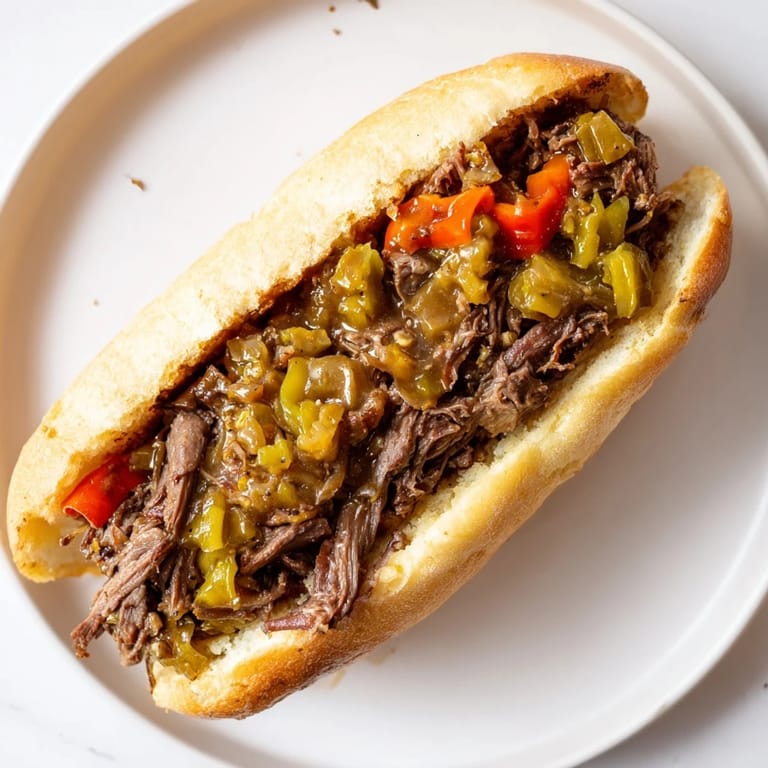
 My neighbor once told me his grandmother used to dunk the entire roll in au jus before filling it, and he swore by it. I was skeptical until I tried it, and he was right—the bread becomes almost cake-like, holding everything together while tasting like it's part of the sandwich rather than just a vehicle. Small moments like that shift how you approach cooking.
The Art of Dunking
There's a spectrum of au jus involvement that changes the whole sandwich. A light brush creates a subtle soak; a quick dunk bathes the roll completely and creates something almost stew-like that you eat with a fork. Neither is wrong, but knowing the difference matters. I've learned that crusty rolls tolerate more liquid than soft ones, and if your rolls are on the delicate side, a brief dip is smarter than a full submersion. Some purists dip the sandwich after it's assembled, which works if you're committed to using napkins.
Timing and Temperature
The beef needs time, full stop—there's no shortcut to tenderness with chuck roast. I've tried shorter braise times, and the beef turns out tough and frustrating. The low, slow route costs you hours but gives you texture that fast cooking can't touch. Room temperature beef won't work here; everything needs to be hot when it comes together so the flavors bloom and the rolls warm through. If you're making this ahead, reheat everything gently on the stovetop before assembling.
Building Your Perfect Version
This sandwich thrives on customization within its structure. Some people add provolone cheese and melt it with the hot beef, which is delicious if you're not keeping it dairy-free. Others roast their own peppers or make their own giardiniera for total control. The framework stays the same: tender beef, aromatic braising liquid, spicy pickled vegetables, sturdy bread. Everything else is you deciding what tastes right.
- If you can't find traditional giardiniera, spicy pickled vegetables like pepperoncini mixed with pickled cauliflower and carrots create a similar brightness and heat.
- Consider the bread seriously—a mediocre roll undermines everything else, so buy from a place that makes theirs fresh.
- The au jus is your secret weapon; keep tasting it through the process and adjust seasoning until it tastes like you want to drink it.
 Pin it
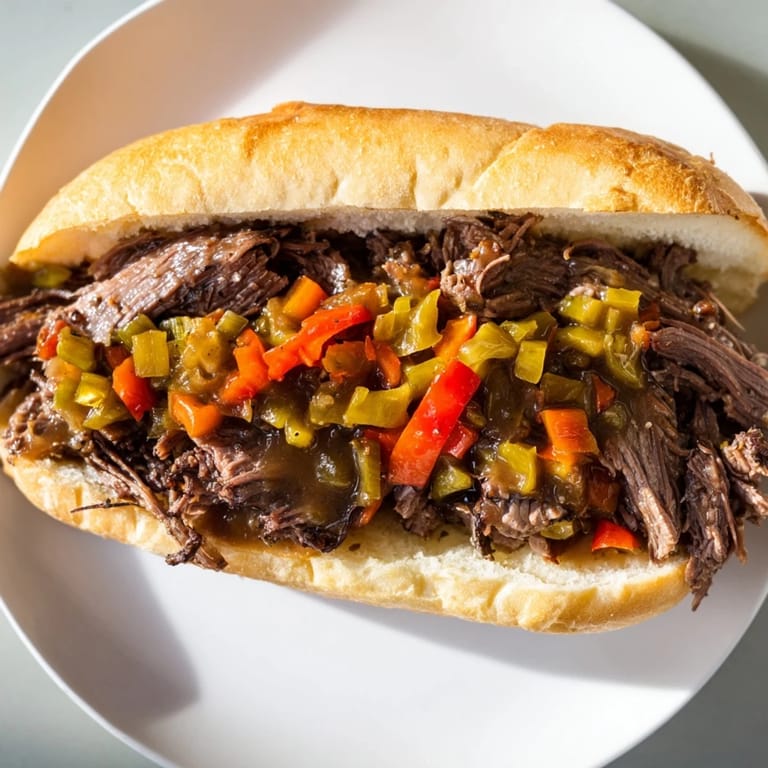
 This sandwich tastes like effort and care, like someone decided you deserved something good. That's what keeps me coming back to making it.
Recipe Questions & Answers
- → What cut of beef works best?
Beef chuck roast is ideal for slow cooking due to its marbling, which breaks down to create tender, flavorful meat.
- → How long should the beef be cooked?
Slow cooking for 4 to 5 hours yields the best tenderness; alternatively, an oven braise at 325°F for 4 hours works well.
- → What is giardiniera?
Giardiniera is a spicy pickled vegetable mix that adds a zesty, crunchy contrast to the rich beef.
- → Can I prepare this in a slow cooker?
Yes, cooking on low for 8 hours or high for 4–5 hours in a slow cooker develops tender, flavorful meat.
- → How can I enhance juiciness?
Dunking the bread rolls in the cooking juices before assembling adds extra moistness and depth of flavor.